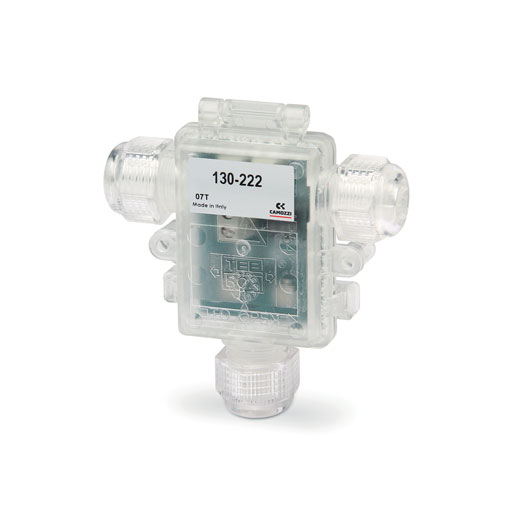
Electronic control device for proportional valves Series 130

PWM control device, with current control system for directly operated proportional valves
Series 130 electronic control device allows to pilot any proportional valve with a maximun current of 1 A.
It turns a standard inlet signal (0-10V or 4-20 mA) into a PWM signal to obtain at the solenoid outlet a current which is proportional to the inlet signal.

A control system of the provided current allows to compensate variations due to heating of the solenoid or to the variation of the supply voltage. It is possible to adjust the maximum and minimum current provided to the solenoid. The outlet signal can have a ramp progress that is adjustable between 0 and 5 s. The device has a firmware dedicated to the proportional valve to pilot in order to guarantee the best performance.

General Data

Material of containerPolycarbonate
Electrical connectionsscrew
Environmental temperature0 ÷ 50°C
Mountingin any position
Power supply6 V ÷ 24 V DC (± 10%)
Consumption0.4 W (without valve)
Analogical input0 ÷ 10 V
4 ÷ 20 mA
Input impedence>30 Kohm with inlet under voltage
<200 ohm with inlet under current
Output PWM120 Hz ÷ 11.7 KHz (fixed, according to the valve chosen)
Max. current (valve)1 A
ProtectionPolarity inversion, short circuit of the outlet
External diameter of cable jacket5 ÷ 7.5 mm with seal only
4 ÷ 6 mm with reducer and seal
Conductor section26 ÷ 16 AWG / 0,13 ÷ 1,5 mm2
Max. length supply/signal cable10 m
Max. length valve cable5 m
IP protection class according to EN 60529IP 54
Ramp functionAdjustable time from 0 to 5 s
Regulation min. current (Offset)0% ÷ 40% F.S.
Regulation maximum current50% ÷ 100% F.S.

Coding Example

130222
130SERIES
2VOLTAGE
2 = 24 V DC (max power 24 W)
3 = 12 V DC (max power 12 W)
4 = 6 V DC (max power 6 W)
5 = 11 V DC (max power 11 W)
2POWER
1 = 3 W
2 = 6.5 W
3 = 3.2 W
4 = 4.3 W
5 = 10 W
6 = 4.2 W
7 = 2.5 W
2PWM FREQUENCY
2 = 500 Hz
3 = 1 KHz
NOTE: it is possible to realize configurations with voltage, power and PWM frequency values that are not yet foreseen in the coding example.
For further information we suggest you to contact our technical department.

Download

Instruction sheets